

Welcome to SWPPD
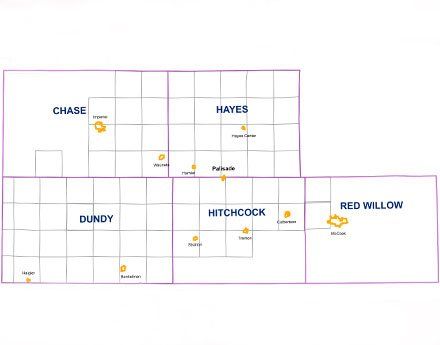
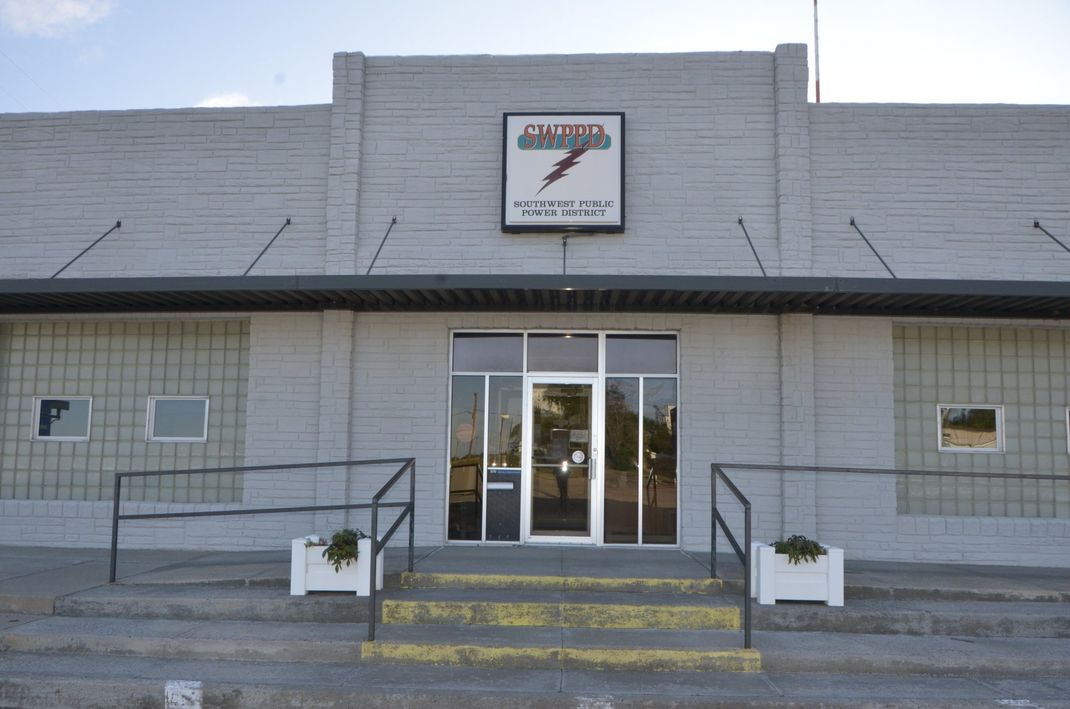
Located in Palisade serving five counties in Southwest Nebraska including: Chase, Dundy, Hayes, Hitchcock, and Red Willow. Servicing 2,594 miles of line, 6,504 meters, and over 113,000 Horsepower of irrigation load.
Helpful Links
Load Management >
Business disputes are part of every business. We help you protect your best interests.
Load Management

We provide employers with practical and strategic advice and guidance.
Local Weather
Draw upon our full complement of services to safeguard and manage your assets.
Power Outages
Latest News
Our main concern is servicing you to the best of our ability and being part of this great community. Here we will keep you informed about current news and things happening at SWPPD including widespread outage situations.
Southwest Public Power District has an opening for the position of Journeyman or Apprentice power line worker for the Benkelman location. Duties include, but are not limited to, maintenance and construction of overhead and underground distribution and sub-transmission facilities. The District operating hours are a compressed work schedule with every other Friday off. After-hours and on-call duty are required. This position requires heavy lifting, pole climbing, and other strenuous activity and working well with other crew members. Must be able to complete associated written and electronic documentation. Must possess a valid Class B CDL and pass a pre-employment drug and alcohol test. Southwest Public Power District offers an excellent wage and benefit package, including paid vacation, sick leave, paid health insurance, and funded retirement plan. Southwest Public Power District’s headquarters office is in Palisade, Nebraska. The region’s schools, small communities, and recreational opportunities make it a great place to live and raise a family. Interested individuals must email a resume, including job training and three references to: jobs@swppd.com. Southwest Public Power District is an equal opportunity employer. Position will be open until filled.
Southwest Public Power District has an opening for the position of Engineering Technician. Duties include, but are not limited to, assisting in the maintenance of the District’s geographic information system (GIS), system planning and improvements, and implementing technology as required to improve the distribution systems. The District operating hours are a compressed work schedule with every other Friday off. This position requires passing a pre-employment drug and alcohol test. Southwest Public Power District offers an excellent wage and benefit package, including paid vacation, sick leave, paid health insurance, and funded retirement plan. Southwest Public Power District’s headquarters office is in Palisade, Nebraska. The region’s schools, small communities, and recreational opportunities make it a great place to live and raise a family. Interested individuals must email a resume, including job training and three references to: jobs@swppd.com . Southwest Public Power District is an equal opportunity employer. Position will be open until filled.
Southwest Public Power District Rate Increase
Effective January 1, 2025, Southwest Public Power District will implement an overall 2.4% rate increase to the customers of the District. During the Southwest Public Power District board meeting held on November 20th, 2024, management with help from a third-party rate consultant, presented to the Board of Directors a current Cost of Service study. The Board of Directors reviewed the study and approved the new retail rates as recommended by management. Over the past 12 years, SWPPD customers have received safe and reliable electricity without experiencing an overall annual customer rate increase in energy usage. In fact, since 2019, a Power Cost Adjustment (PCA) credit has been passed through from our energy provider making kilowatt hour (kWh) rates even cheaper than they were twelve years ago. Aside from a customer charge increase on single phase service in 2022, this will be the first increase in kWh usage since 2013. Over this same period of time, inflation has risen by 33% with the majority of these increases coming in the past 4 years. Since 2022, we have seen an increase of between 30% to more than 100% in the costs of material items such as wire and transformers. We are also forced to keep more material on hand since it is taking longer to acquire those materials. These increases are the driving force that continues to pressure the District to maintain our financial integrity while at the same time, supporting the necessary maintenance and upgrades of the electric plant. Some projects have even been delayed in an effort to reduce costs, but that is proving to be only a short-term fix. A recent study from Cooperative Electric Energy Utility Supply Inc (CEEUS) shows that over the last 4 years, transformers are 99% more expensive today. Conductor has increased 62% while crossarms and poles cost over 103% more today. . Southwest Public Power District has been able to cope with rising inflation and expenses while still maintaining rates well below the national average. This has been accomplished by an extremely good working relationship between the employees of SWPPD and the Board of Directors keeping well informed and making sound educated business decisions in an effort to maintain the primary purpose for the establishment of SWPPD: to bring safe-dependable-affordable power to our customers. Although no one likes to see the cost of their utilities increase, it is crucial for SWPPD to continue to meet our financial goals and provide you with safe and reliable electricity. The new rates can be viewed on our website at www.swppd.com/rates-payment. If you have any questions, please do not hesitate to contact us at (308)285-3295.

Southwest Public Power District is proud to announce the Frank & Betty Potthoff Memorial Scholarship Program! Frank and Betty Potthoff were both formerly employed by SWPPD, and the Potthoff family has generously offered to fund this scholarship as a memorial to them. This $500 per semester scholarship will help a student attend the Utility Line Program at either Northeast Community College or Western Nebraska Community College. To qualify for the scholarship students must be a high school senior or graduate and reside in the border territory generally served by SWPPD and all towns therein. The applicant must have already applied to be admitted to the Utility Line Program at either college and have been accepted or placed on a waiting list. To apply for the scholarship, the student must submit a personal essay to SWPPD not more than 350 words in length explaining why they are interested in the Utility Line Program as their course of study. They must also provide their class rank and GPA. If the applicant has graduated high school and is attending college, they must submit college transcripts with their essay. Applicant essays will be forwarded to a selection committee. SWPPD would like to award the first scholarship for the Fall semester of 2026. Applicants must have their essays submitted by May 31, 2026 in order to be eligible. Please contact Frank Bonini at (308)285-3295, or frankb@swppd.com, with questions.
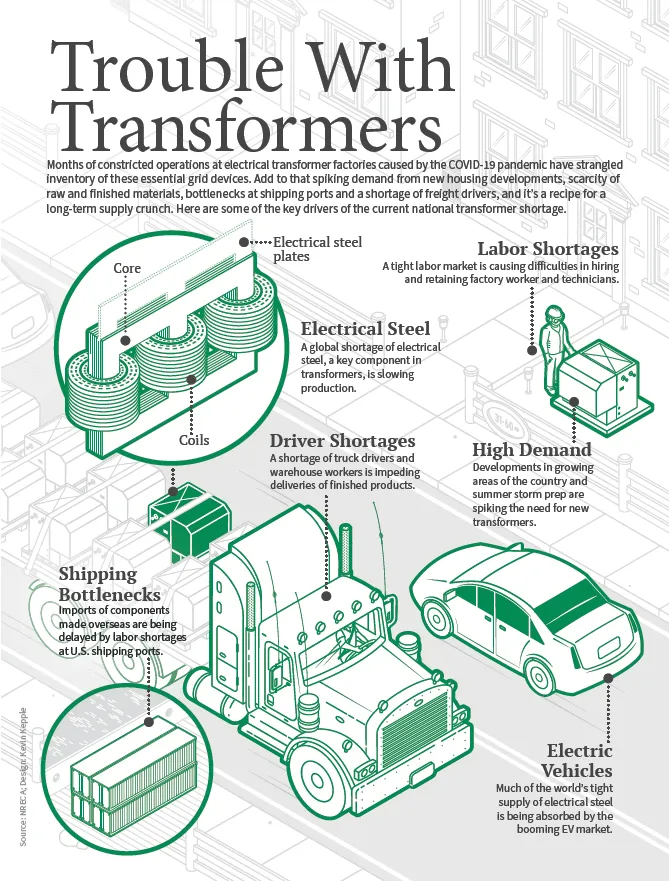
As the country continues to recover from the many recent global and national events, the supply chain issues are going to remain a challenge for at least the next 12 to 24 months. The inventory SWPPD requires to build and maintain new and existing services has been strained. Today, the current order lead time for transformers used in our industry are estimated to be approximately 52 weeks out. Unfortunately, transformers are not the only inventory item of concern. Everything from the raw materials used in our conductor wire to the poles, cross-arms and bolts used in construction have been impacted. The trade associations and organizations we belong to have been proactive in working with the federal government and with manufacturers to make sure we have what we need to serve our customers. SWPPD has adapted by ordering supplies further in advance and in larger quantities when the manufacturer allows. We also continue to recycle and reuse materials where possible. Materials ordered by SWPPD are also subject to change based on several unexpected events such as national and local storm restoration needs, transportation costs and availability, raw material interruptions and many other possible unexpected scenarios. These circumstances have been substantial enough that we can no longer guarantee that new services will be completed prior to the summer of 2023. More specifically, no new irrigation service requests that are not already in our que will be built before the summer of 2023. Therefore, any new service requests for the rest of the year will be put on a waiting list on a “first come, first serve” basis. The Board and Management at SWPPD felt strongly that it was better to communicate this delay to our customers as far in advance as possible to make the necessary adjustments in your plans if you are considering a new service in 2023. We apologize for any inconvenience. Please reach out to SWPPD if you have any questions.
EnergyWise℠ Tips
Saving energy is something we all strive to do. Here we have a complete blog dedicated to energywise tips regarding the electric industry.
By: NPPD's Energy Efficiency Program Manager Cory Fuehrer In 1906, the Pennsylvania Railroad began using the first battery-powered industrial truck to move baggage between platforms, speeding the loading and unloading of passenger trains. Often nicknamed the "Electric Porter," this equipment became the original predecessor of today’s electric forklifts. While the need for more lifting power led to the development of fuel-powered forklifts during World War I, recent developments and cost reductions in lithium-ion battery technology have led to electric lifts outselling fuel-powered by nearly 3 to 1 in the world market today. Distribution centers, manufacturing facilities and third-party logistics providers are heavily investing in electric forklifts and intelligent fleet management systems to improve productivity and reduce operational downtime. Here are a few more advantages electric forklifts have over fuel-powered lifts: Less maintenance – Upkeep is generally limited to brakes, tires, and basic battery care. Fewer moving parts – Unlike fuel-powered units, electric forklifts have no engine, transmission or radiator. No emissions – In addition to eliminating ventilation concerns, electric lifts are safer for food and pharmaceutical facilities. Lower cost – In addition to reducing battery cost and bringing initial purchase prices down to comparably sized fuel-powered forklifts, electric units boast lower maintenance and energy costs. Smoother, quieter ride – Without an internal combustion engine producing noise and vibration, electric forklifts provide a better user experience. Smoother acceleration – Since electric units do not have a clutch, operators do not experience the common “jump” of an open differential used in fuel-powered forklifts. Often lighter, smaller – Unless the weight is necessary for counterbalancing, owners can often select an electric lift that weighs less and has a smaller footprint than a fuel-powered unit. This makes it easier to maneuver in tight aisles, easier to transport and less likely to damage floors. Repowering – Batteries can be easily swapped in the same amount of time or less than refueling. Recharging batteries during off-peak hours allows large facilities to take advantage of certain utility rate programs. In partnership with Nebraska Public Power District, your local public power provider wants to help you do the heavy lifting. To find additional ways electrical technologies can make it easier to complete the job, contact your local utility or visit www.energywisenebraska.com.
We Value Your Opinion
Southwest Public Power District is committed to providing the best possible customer service. We value input from our customers and invite you to use the Contact Us form to share your comments, concerns, questions and suggestions. Compliments are accepted as well! Rest assured that all correspondence will be reviewed and handled with professional confidence and courtesy.
Send A Comment
Board of Directors
In March of 1945, the Southwest Electric Membership Corporation was born and electric light took its first steps to become an active part of life in southwest Nebraska. At the time nine men were elected to the board of directors. Many things in the electrical industry have changed over the years but one thing remains the same, continued leadership and dedication to the electrical needs of southwest Nebraska.
Meet The Board
A tour of Southwest Nebraska….our home.
We live in a very special place with proud and hard working communities. This video is a small peak into the places we call home in the southwest corner of Nebraska. Southwest Public Power District is proud to be a part of these communities. If you are not able to see our video here visit YouTube.
Stay Informed

Manager's Articles
General Manager Colyn Suda will keep you updated with monthly articles from SWPPD about industry news, safety tips, and ways to save you money. Also, this is your direct link to the Nebraska Rural Electric Association. Here you will find information about industry and political events and you can also sign-up for notifications.
If you have your expensive electronic devices plugged into surge protectors, good for you! But if you bought surge protectors, plugged everything into them and forgot all about them, you could be overlooking a potential problem: Old surge protectors wear out and need replacing every now and then. Surge protectors do not last forever. The components that absorb electrical surges can wear out over time. After enough surges, a device may continue working as a power strip while providing little or no surge protection.. Check your surge protector occasionally. Many models have an indicator light that shows whether surge protection is still active. If the light is off, consult the manufacturer's instructions. It may be time for a replacement. Inspect the device’s cord and outlets. Replace the unit if you see scorch marks, cracks, frayed wires or other damage. A power strip that feels unusually warm should also be replaced. Experts often recommend replacing surge protectors every few years, especially in areas that experience frequent storms and power fluctuations. A quick inspection takes only a minute. A stereo system or piece of home theater equipment that gets fried during a power surge ruins that investment forever.
Ceiling fans can make a room feel cooler. But they do not actually lower the temperature in that space. According to the U.S. Department of Energy, fans create a wind-chill effect that helps people feel cooler. The room itself does not become cooler. In fact, DOE says, ceiling fans may allow homeowners to raise the thermostat setting by about 4 degrees in the summer without reducing comfort. That means a fan saves energy only when people are there to enjoy the breeze. Running a ceiling fan in an empty room does not improve comfort and uses electricity unnecessarily. Also, did you know that you need to change the direction that your fan blades spin every spring and fall? During summer, ceiling fans should rotate counterclockwise. That pushes air downward and creates the cooling effect people feel. Running them in the wrong direction for the season won’t keep you comfortable.
When an electric bill suddenly rises, many people assume their electric cooperative raised its rates. Sometimes that’s the case. But more often, the biggest reason is simple: You used more electricity. According to the U.S. Energy Information Administration, nearly 90% of U.S. households use air conditioning. During hot weather, cooling systems run longer and more often. Even if the price of electricity stays the same, using more electricity means a higher bill. Heat waves can have a bigger effect than you might realize. A few extra days of very hot weather may cause an air conditioner to run for hours longer each day. Refrigerators, freezers and dehumidifiers may also work harder during extreme heat. If your bill seems unusually high, compare your electricity use with the same month last year. Most utility bills show the number of kilowatt-hours used. That number can tell you whether the increase came from higher use, higher rates or a combination of both. You can also look for simple causes if you notice an unexpected jump in your energy use. A clogged air filter, a thermostat set a few degrees lower than usual or windows receiving direct afternoon sun can all increase cooling costs. The next time your electric bill arrives, don't just look at the amount due. Check how much electricity you used. The answer to a higher bill is often hiding in that number.